
Breast Cancer: Early Signs, Symptoms, Causes and Treatment Options
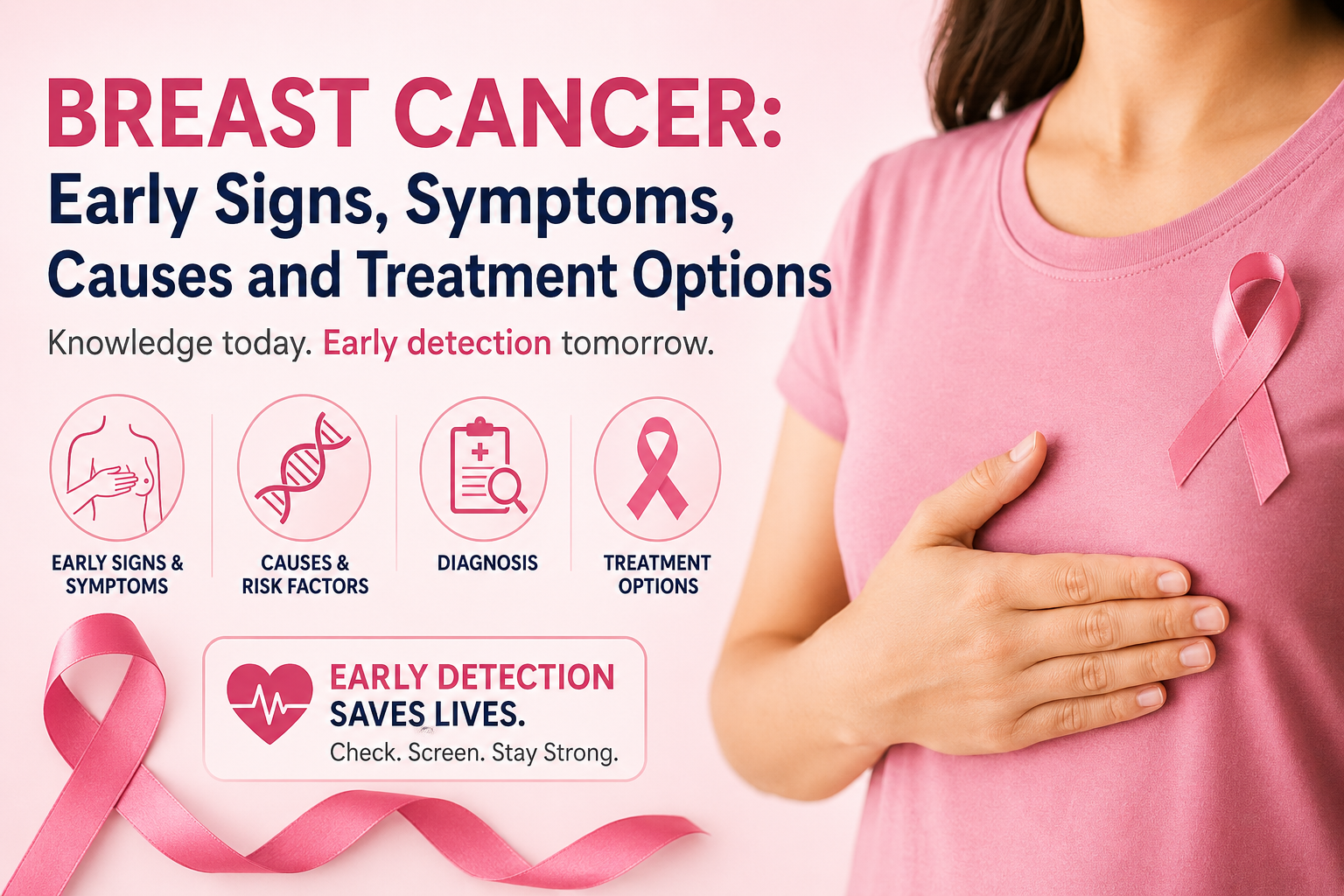
Breast cancer remains one of the most common cancers affecting women worldwide, though it can also occur in men. Despite how frequently it’s discussed, many people still don’t know what early warning signs to look for, what actually causes the disease, or what treatment really involves. Understanding these basics can make a real difference — not just in easing anxiety, but in catching the disease early, when it’s most treatable. This guide breaks down what you need to know in simple, practical terms.
What Is Breast Cancer?
Breast cancer develops when cells in the breast begin to grow uncontrollably, often forming a lump or mass that can be seen on an imaging scan or felt during an exam. It typically starts in the ducts (tubes that carry milk to the nipple) or the lobules (glands that produce milk), though it can spread to other parts of the body if not caught early. Not every lump is cancerous — many breast changes are benign — but any new or unusual change is worth having checked by a doctor.
Early Signs and Symptoms
The earliest stages of breast cancer often produce no symptoms at all, which is exactly why routine screening matters so much. As the disease progresses, however, certain physical changes tend to appear. Being familiar with these signs — and reporting them promptly — is one of the simplest ways to protect yourself.
Some of the most common early symptoms include:
- A new lump or thickening in the breast or underarm area (often painless and hard, though not always)
- Changes in breast size, shape, or contour
- Skin changes on the breast, such as dimpling, puckering, or a texture resembling an orange peel
- Redness, scaliness, or unusual warmth on the breast skin
- Nipple changes, including inversion, discharge (especially if bloody), or scaling
- Persistent pain in one specific spot on the breast that doesn’t go away
- Swelling in all or part of the breast, even without a distinct lump
It’s worth remembering that many of these symptoms can also be caused by non-cancerous conditions like cysts, infections, or hormonal changes. That said, any symptom that persists for more than a couple of weeks should be evaluated by a healthcare provider rather than dismissed or self-diagnosed.
What Causes Breast Cancer?
There’s no single cause of breast cancer. Instead, it usually results from a combination of genetic, hormonal, and lifestyle factors that affect how breast cells grow and divide. Scientists don’t fully understand why some people develop the disease and others with similar risk factors never do, but decades of research have identified clear patterns in who is more likely to be affected.
Key risk factors include:
- Age – Risk increases significantly after age 50
- Genetics – Inherited mutations in genes like BRCA1 and BRCA2 substantially raise risk
- Family history – Having a close relative with breast or ovarian cancer increases likelihood
- Hormonal factors – Early menstruation, late menopause, or hormone replacement therapy can play a role
- Reproductive history – Never having children, or having a first child after age 30
- Lifestyle factors – Obesity, alcohol consumption, physical inactivity, and smoking
- Dense breast tissue – Makes tumors harder to detect and is itself a risk factor
- Radiation exposure – Prior radiation therapy to the chest area, particularly at a young age
It’s important to note that having one or even several risk factors doesn’t guarantee someone will develop breast cancer — and many people diagnosed have no identifiable risk factors at all. This unpredictability is part of why regular screening is recommended for all women, not just those considered “high risk.”
How Is Breast Cancer Diagnosed?
If a screening mammogram or physical exam reveals something unusual, doctors typically follow up with additional imaging, such as an ultrasound or MRI, to get a clearer picture. If a suspicious area is found, a biopsy is usually the next step — a small sample of tissue is removed and examined under a microscope to confirm whether cancer cells are present. Biopsy results also reveal important details, like the cancer’s type and how aggressively it might behave, which shape the treatment plan that follows.
Treatment Options
Treatment for breast cancer is rarely one-size-fits-all. Oncologists tailor a plan based on the cancer’s stage, type, hormone receptor status, and the patient’s overall health and preferences. In many cases, a combination of treatments works better than any single approach alone.
Common treatment options include:
- Surgery – Ranging from a lumpectomy (removing only the tumor) to a full mastectomy (removing the entire breast)
- Radiation therapy – Uses targeted energy to destroy remaining cancer cells, often after surgery
- Chemotherapy – Uses drugs to kill fast-growing cancer cells, sometimes given before surgery to shrink tumors
- Hormone therapy – Blocks hormones like estrogen that fuel certain types of breast cancer
- Targeted therapy – Focuses on specific genetic markers, such as HER2-positive cancers, with fewer side effects than traditional chemo
- Immunotherapy – Helps the body’s immune system recognize and attack cancer cells, used in select cases like triple-negative breast cancer
Recovery doesn’t end when active treatment does. Many survivors continue with follow-up scans, hormone therapy, and physical rehabilitation for years afterward, alongside emotional and psychological support to help process the experience.
Final Thoughts
Breast cancer can feel overwhelming to think about, but knowledge really is protective. Knowing the early signs, understanding your personal risk factors, and staying consistent with screenings — whether that’s a monthly self-exam or a yearly mammogram — puts you in a stronger position to catch problems early. If you ever notice a change in your breasts that feels off, don’t wait it out. A quick conversation with your doctor could make all the difference.